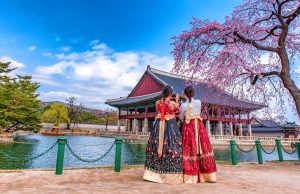


In recent years, Korean language study in South Korea has become a popular starting choice for many international students, especially young people from Vietnam. Before officially entering university, vocational, or graduate programs, having a solid foundation in the Korean language is a major advantage. It helps students adapt more easily, integrate confidently into daily life, and seize more opportunities for scholarships as well as future employment.
Beyond language learning, Korean language study programs also offer valuable real-life experiences of living and studying in South Korea—a country known for its advanced education system, modern learning environment, and unique cultural identity. This program serves as an important stepping stone, helping students build a strong and long-term study abroad journey.
Why Choose a Korean Language Study Program in South Korea (D4-1 Visa)?
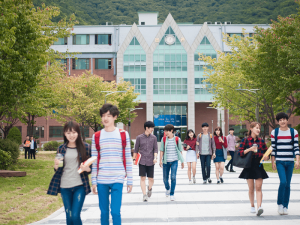
The D4-1 Korean language program lasts from 6 months to 2 years, focusing on the comprehensive development of all four language skills: listening, speaking, reading, and writing. Students are required to take a placement test upon entry and are then assigned to classes based on their proficiency level, progressing from beginner to advanced stages.
In addition to regular classes, students often participate in extracurricular activities, festivals, and cultural exchange events, which make language learning more engaging and practical. These activities also provide valuable opportunities to practice daily communication skills—an essential factor for successfully studying and living abroad.
Key advantages of the D4-1 program:
-
Native-language learning environment for faster improvement
-
Reasonable tuition fees and flexible admission periods
-
Opportunities for part-time work and practical skill development
-
Easy progression to higher levels of education
-
Modern facilities and a friendly, supportive learning environment
Requirements and Application Documents for the Korean Language Study Program in South Korea (D4-1)
To participate in this program, applicants must:
-
Be 18 years old or above, and have graduated from high school or an equivalent level.
-
Be in good health and free from infectious diseases.
-
Have sufficient financial capacity to cover tuition fees and living expenses during the study period.
-
Complete all required documents as requested by the school.
The application dossier typically includes: graduation certificate, academic transcripts, financial proof, a valid passport, ID photos, and several other personal verification documents.
Application Process:
-
Application deadline: 1–3 months before the start date
-
Application review
-
Tuition fee payment
-
Admission approval
-
Visa application
Admission Documents:
-
Application form
-
Copy of passport and ID photos
-
Bank statement (USD 10,000 or above)
-
Copy of graduation certificate / highest academic qualification
-
Personal statement
-
Proof of student insurance
-
Application fee
Admission Schedule and Program Duration
The program has four main intake periods each year: March, June, September, and December. Each term lasts approximately 10 weeks.
The average study duration ranges from 6 months to 2 years, depending on the student’s Korean language proficiency and study goals. After each term, students are required to take an assessment in order to be placed into the next level.
Costs of Studying Korean in South Korea
Scholarship Opportunities and Part-Time Work During Study
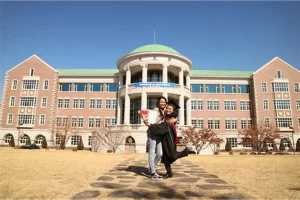
To reduce the cost of participating in Korean language study programs in South Korea, students may apply for scholarships offered by Korean universities or by the Korean government for international students.
Each type of scholarship has its own specific requirements; however, in general, the basic conditions to be eligible for a scholarship include:
-
Graduation from high school with a GPA of over 7.0 across all three years
-
Good conduct and discipline records
-
Higher TOPIK levels increase scholarship opportunities and values
To work part-time in South Korea, international students holding a student visa must apply for permission to engage in certain extracurricular or part-time activities from the Immigration Office. For students enrolled in language programs, applications are only allowed after completing at least six months of study. In addition, official approval from the school is required at the time of application.
Once permission is granted, students holding a D4-1 visa are allowed to work up to 20 hours per week. University students with a TOPIK level of 3 or higher generally find jobs more easily and are permitted to work without hour limits during academic breaks.
Common part-time jobs include working at convenience stores, cafés, and restaurants. However, if Korean language proficiency is limited, finding such jobs may be challenging. The hourly wage for basic jobs such as serving staff or cashiers ranges from 9,000 to 10,000 KRW (approximately 8 USD). Meanwhile, jobs such as private tutoring or English teaching offer higher income, ranging from 25,000 to 40,000 KRW per hour (approximately 25–32 USD).
Please note that students holding a student visa are not permitted to work in certain industries, such as manufacturing.
Opportunities After Completing a Korean Language Study Program in South Korea
After completing the program, students can choose from several pathways:
-
Continue studying at the undergraduate or graduate level. 👉 Learn more about studying at Korean universities
-
Transfer to vocational programs or apply for scholarships in specialized fields
-
Take the TOPIK exam to improve opportunities for scholarships or employment
-
Change visa status to continue studying or work legally in South Korea
Enrollment Process for the Korean Language Study Program in South Korea at Vijako
(All documents must be translated and notarized into Korean or English)
| No. | Document | Notes |
|---|---|---|
| 1 | Passport | Valid for at least 1 year |
| 2 | ID photos (3.5 x 4.5 cm) | White background, 4–6 photos |
| 3 | High School Transcript | Translated & notarized |
| 4 | Graduation Certificate | High school / College / University – translated & notarized |
| 5 | Birth Certificate | Translated & notarized |
| 6 | Household Registration Book | Full translation & notarization |
| 7 | ID card / Citizen ID of the student and parents | Translated & notarized |
| 8 | Proof of financial capacity (bank savings book) | Minimum USD 10,000, deposited at least 6 months in advance |
| 9 | Proof of occupation and income of the financial sponsor (usually parents) | Certified by local authorities or employer |
| 10 | Medical examination certificate | Issued by a designated hospital |
| 11 | Other relevant documents (if any) | e.g. Korean language certificates, TOPIK, etc. |
🔶2. Choosing a School & Applying for the Letter of Admission (입학허가서)
Contact and submit applications to universities that offer Korean language programs for international students.
Universities usually require:
-
An online interview or a self-introduction video.
-
Application review fee: approximately USD 50–150.
Once the application is approved, the university will issue a Letter of Admission.
🔶3. Financial Proof
-
Open a savings account with USD 10,000 (approximately 250 million VND).
-
The deposit must be maintained for at least 6 months before submitting the visa application, or deposited into a Korean bank account as required by the school.
-
A bank balance confirmation letter (in English or Korean) may be required.
🔶4. Applying for the D4-1 Visa
After receiving the Letter of Admission and completing all required documents, submit the visa application at:
-
Embassy of the Republic of Korea in Hanoi (for household registration from Da Nang and northward).
-
Consulate General of the Republic of Korea in Ho Chi Minh City (for household registration from Quang Nam and southward).
Visa types:
-
Regular D4-1 visa: processing time of about 2–4 weeks.
-
Top 1% university D4-1 visa: faster and simpler processing (no interview, no academic record verification).
🔶 5. Visa Interview (if required)
Some applicants may be asked to attend an interview at the Consulate/Embassy.
Common interview questions focus on:
-
Purpose of studying in Korea
-
Study plan
-
Financial situation and sponsor
-
Basic knowledge about the chosen school and living area
Official Reference Sources
-
Study in Korea (Government portal): https://www.studyinkorea.go.kr
-
Ministry of Foreign Affairs of Korea: https://www.mofa.go.kr
-
Global Korea Scholarship (GKS): https://www.niied.go.kr
>> Xem thêm: Du học tiếng Nhật – Bước đệm vàng để hòa nhập cuộc sống và học tập tại Nhật
Contact for Consultation
👉 Register for a free consultation to receive a personalized study-abroad roadmap aligned with your abilities and goals.
Head Office: 12th Floor, VTC Voice of Vietnam Building, 23 Lac Trung Street, Hanoi
 Branch Offices: 233 Tam Trinh, Hanoi
Branch Offices: 35/570 Kim Giang, Hanoi
Branch Offices: 07 Nguyen Chanh, Nam Dinh
 Hotline: 096 848 9996