

In addition to vocational training and undergraduate programs, studying for a master’s degree in South Korea is becoming an increasingly attractive option for many international students. Not only does it provide a solid academic foundation, but master’s programs also offer opportunities for in-depth research and the chance to build a broad international network.
With a modern learning environment, a team of highly experienced faculty members, and numerous support policies for international students, South Korea is steadily affirming its position as an ideal destination for those who wish to enhance their academic qualifications and expand their career opportunities in the future.
1. Overview of Studying Master’s Degree Programs in South Korea
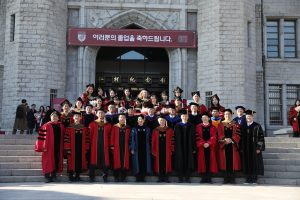
The D2-3 visa is issued to international students enrolled in master’s degree programs in South Korea. These programs typically last from 1.5 to 2 years and focus on advanced academic knowledge, research methodologies, and high-level scholarly skills.
Students may choose to study in Korean or English, depending on the university and major. Many master’s programs in South Korea combine coursework with research activities, allowing students to gain practical experience alongside a strong theoretical foundation.
>> Xem thêm: Du học hệ đại học tại Hàn Quốc (Visa D2-2) – Cánh cửa vươn tới tri thức quốc tế
2. Why Study for a Master’s Degree in South Korea?
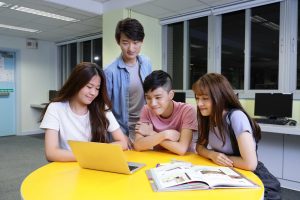
South Korea is rapidly becoming one of the most preferred destinations for international postgraduate students, especially Vietnamese students. The appeal lies not only in its high-quality education and reasonable tuition fees, but also in clear career prospects and opportunities for long-term employment after graduation.
Studying for a master’s degree in South Korea is a strategic choice for those who wish to enhance their academic credentials, broaden career opportunities, and develop themselves in an international environment.
2.1. Outstanding Education Quality – Globally Recognized Degrees
South Korea’s higher education system consistently ranks among the top worldwide. Many universities are featured in QS and THE rankings, such as Seoul National University, KAIST, Yonsei University, and POSTECH.
Master’s programs are designed according to international standards, integrating academic research with practical application. In addition to traditional majors, an increasing number of programs are taught entirely in English, making them more accessible to international students without requiring advanced Korean proficiency from the outset.
Degrees from South Korean universities are widely recognized across Asia, Europe, and North America, providing graduates with a significant competitive advantage in employment or further doctoral studies.
2.2. Reasonable Tuition Fees – Manageable Living Costs
Compared to many other developed countries, South Korea offers relatively affordable total study costs. On average, tuition fees for master’s programs range from USD 6,000 to USD 10,000 per year. Monthly living expenses typically range from USD 300 to USD 500.
University dormitories are modern, clean, and subsidized, helping international students significantly reduce living expenses. This cost level is suitable for many Vietnamese families while still ensuring a high quality of education and life in major cities such as Seoul, Busan, and Daegu.
2.3. Abundant Scholarship Opportunities – Especially Favorable for Vietnamese Students
South Korea offers a wide range of scholarships for international students. In addition to university-based scholarships, one of the most prestigious fully funded programs is the Global Korea Scholarship (GKS), which covers full tuition fees, living expenses, and round-trip airfare.
Furthermore, many universities, corporations, and private foundations in South Korea provide scholarships covering 30%–100% of tuition fees. These opportunities significantly reduce financial pressure and enable Vietnamese students to access high-quality education more easily.
2.4. Modern Academic Infrastructure
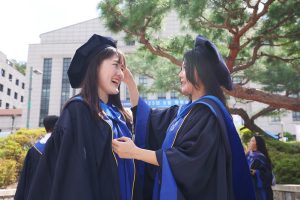
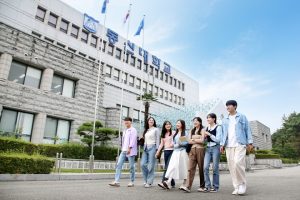
South Korea boasts advanced technology, modern educational infrastructure, and comprehensive student support services. Students study in a safe environment with access to digital libraries, research laboratories, open study spaces, and efficient public transportation systems.
All these factors contribute to an ideal learning environment that supports both academic excellence and personal development.
3. Admission Requirements
To apply for a master’s degree program in South Korea, applicants must hold a bachelor’s degree or an equivalent qualification.
Language proficiency is mandatory: typically TOPIK level 3–4 for Korean-taught programs, or IELTS/TOEFL for English-taught programs. Applicants must also be in good health, meet the documentation requirements of the university and the Korean Embassy, and demonstrate sufficient financial capability to cover tuition and living expenses during their studies.
4. Costs of Studying for a Master’s Degree in South Korea
4.1. Tuition Fees of Studying for a Master’s Degree in South Korea
Tuition fees for master’s programs range from 2,000,000 – 3,500,000 KRW per semester, or approximately 4,000,000 – 7,000,000 KRW per year, depending on the university and field of study. An academic year typically consists of two semesters, making tuition fees the largest component of the overall study budget.
4.2. Accommodation Costs
Students may choose to live in on-campus dormitories, with costs ranging from 200,000 – 600,000 KRW per month for shared rooms (2–3 students per room). Alternatively, students may rent private accommodation off campus, which is slightly more expensive but can be shared to reduce costs. Choosing suitable housing options can help students save significantly.
4.3. Living Expenses and Health Insurance
Average living expenses range from 250,000 – 400,000 KRW per month, covering food, transportation, and personal expenses. International students are also required to purchase health insurance, costing approximately 100,000 – 250,000 KRW per year, to ensure access to medical care during their stay in South Korea.
4.4. Estimated Total Cost
The estimated total cost for one year of master’s study in South Korea is approximately 12,000,000 – 15,000,000 KRW (around 200–250 million VND), including tuition fees, accommodation, and living expenses. This cost is considered reasonable given the quality of education and post-graduation career opportunities.
5. Study Duration and Part-Time Work
Master’s programs typically last 2 years (4 semesters). Students usually attend classes 2–3 days per week (some universities require only 1 day), mainly for consultations and meetings with academic supervisors. The remaining time can be used for self-study or research at home or in libraries.
Some programs may extend by one additional semester if the graduation thesis is not completed on time.
Due to flexible schedules, students have opportunities to work part-time, provided they maintain academic performance and research quality.
To work legally, international students must apply for a part-time work permit from the local Immigration Office. After arriving in South Korea as a master’s student, part-time work is allowed if students meet conditions such as satisfactory attendance, acceptable GPA, or completion of at least one semester at a Korean institution.
According to regulations, students may work up to 20 hours per week during semesters. Students holding TOPIK level 4 or higher may work up to 25 hours per week.
6. Career Opportunities After Graduation
A master’s degree from a South Korean university holds strong value in the international labor market. Graduates may seek employment at Korean or multinational companies or switch to long-term employment visas (such as D-10, with the possibility of applying for F-2 residency visas).
With advanced academic training and strong research skills, graduates often have a clear advantage when applying for specialized or managerial positions. Those interested in academia may also continue their studies at the doctoral level.
7. Admission Process at Vinjako
7.1. Document Preparation Studying for a Master’s Degree in South Korea
✅ 7.1. Document Preparation
The application and visa dossier includes: passport, ID photos, bachelor’s degree and transcripts (translated and notarized), TOPIK or IELTS certificates, birth certificate, national ID card, household registration, savings book, and income verification documents.
Additionally, applicants must provide a criminal background check, medical examination certificate, and the university’s application form.
✅ 7.2. Application Steps
The process includes:
-
Consular legalization of academic certificates and transcripts
-
Submission of documents to the university → receipt of admission letter and tuition invoice
-
Payment of tuition fees → receipt of original admission documents
-
Submission of D2-3 visa application at the Korean Embassy/Consulate
-
Visa issuance, pre-departure preparation, and enrollment
⏳ 7.3. Visa Processing Time
Visa processing typically takes 2–4 weeks, depending on individual cases and application timing.
8. Conclusion
Studying for a master’s degree in South Korea is a valuable journey that offers long-term academic, research, and career development opportunities. It is not only a path to advanced knowledge, but also a chance to broaden perspectives, build international networks, and establish personal and professional credibility.
With Vinjako’s guidance, this journey becomes clearer, more efficient, and more secure. Master’s study requires thorough preparation in both documentation and career orientation. Vinjako supports students from choosing the right major and university, preparing visa applications, to settling into life in South Korea.
With years of consulting experience, an extensive educational partner network, and dedicated support, Vinjako helps bridge the gap between dreams and reality.
Contact for Consultation
👉 Register for a free consultation to receive a personalized study-abroad roadmap aligned with your abilities and goals.
Head Office: 12th Floor, VTC Voice of Vietnam Building, 23 Lac Trung Street, Hanoi
 Branch Offices: 233 Tam Trinh, Hanoi
Branch Offices: 35/570 Kim Giang, Hanoi
Branch Offices: 07 Nguyen Chanh, Nam Dinh
 Hotline: 096 848 9996